By Brian French | FloridaTechnologyNews.com | October 31, 2026
Quick Answer
A prominent Google Ads buyer, Max Anderson, says Google is growing Search revenue by charging advertisers more for lower-quality clicks, mainly by stretching “exact match” keywords to cover “close variants” the advertiser never chose. Google controls the auction, the matching rules and the data, so advertisers can’t fully check the bill. If enough of them walk away, a slow leak could turn into a meaningful cash-flow problem.
The Post That Lit Up the Ad World
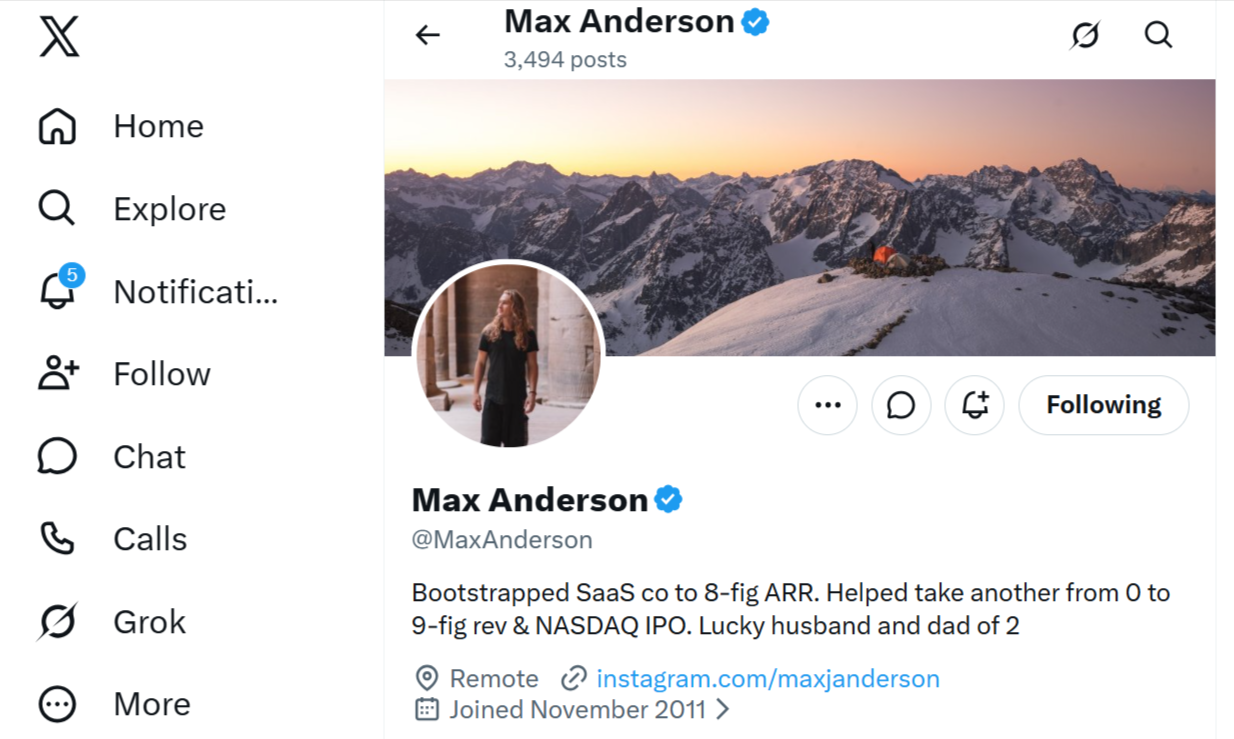
In July 2026, Max Anderson, who says he has personally spent more than $500,000 a month on Google Ads for years, published a long post on X responding to Sundar Pichai’s victory lap on Alphabet’s second-quarter results. The post has drawn more than 5.7 million views.
His argument is blunt. Anderson calls Google’s Search revenue growth “artificial & extremely unhealthy” for the business long term. In his view, traditional search volume is being eaten by AI chatbot queries that carry no ads, and Google is filling the gap by extracting more from the advertisers it already has.
He points to three practices:
- Auction pricing. He says Google moved away from charging winners a penny above the next-highest bid and now charges closer to what an advertiser is willing to pay.
- Looser keyword targeting. He says even the strictest “exact match” setting now triggers ads on thousands of unrelated searches labeled “exact match (close variant),” with no way to turn it off.
- Budget overruns. He says campaigns with $1,000 daily caps began spending $2,000 or more a day, with the extra money going to those close-variant clicks.
Anderson’s conclusion is that these are the habits of a company protecting quarterly earnings while its core business weakens.
What “Close Variant” Really Means
Exact match used to mean exactly what it said. An advertiser bidding on a phrase paid only when a searcher typed that phrase. That precision is what made paid search so valuable for small businesses with tight budgets.
The definition has stretched in stages:
| Year | Change to Exact Match |
|---|---|
| 2012 | Close variants introduced, with opt-out |
| 2014 | Opt-out removed; plurals and misspellings forced in |
| 2017 | Reordered words and function words added |
| 2018 | “Same meaning” queries added |
| 2025–26 | AI Max adds broad and keywordless matching |
In 2014, Google announced it would always automatically include close variants when matching ads to searches, removing advertisers’ ability to lock a match to the exact keyword. Advertisers objected loudly at the time; there was even a Change.org petition asking Google to give back the choice to exclude close variants.
In 2017 Google expanded exact match again to include rewording and reordering, and by 2018 it could include words with similar meaning. One industry analysis noted that the same-meaning expansion extends ads to searches advertisers weren’t showing for, producing more clicks and more revenue for Google.
The newest layer is AI Max for Search. Google blocked new campaign-level broad match settings from August 3, 2026, converted affected campaigns during September, and began rolling out AI Max to all accounts globally on August 19, 2026. Its matching feature expands keywords through broad match and “keywordless technology,” using keywords, ads, landing pages and inferred intent.
Why Results Decline
Every new variant puts an advertiser’s ad in front of searches it didn’t choose. Some of those clicks convert. Most don’t. Practitioners who track this closely report that close variants often perform significantly worse than true exact matches on cost per conversion.
Meanwhile, when more advertisers are pulled into the same searches, competition rises. One agency warned when the 2018 change arrived that increased competition on exact match terms should push cost-per-click prices higher.
The math for a Florida plumber, dentist or personal injury firm is simple: more clicks, higher prices, lower relevance and a weaker return on every dollar.
Google Holds All the Cards
The deeper problem is that Google writes the rules, runs the auction and keeps the scorecard.
- It defines the match. What counts as a “close variant” is decided by Google’s algorithms, not the advertiser.
- It sets the price. The auction mechanics are not public.
- It controls the data. Advertisers see the search terms report Google chooses to show them.
- It grades its own work. Google’s case for automation rests largely on Google’s own performance figures.
That last point matters. Google says advertisers who activate AI Max typically see 14% more conversions or conversion value at a similar CPA or ROAS. But an independent review noted that none of the available figures, including Google’s, comes from a controlled, published study.
There is also sworn testimony that Google has quietly adjusted prices before. During the federal antitrust trial in 2023, Google ads executive Jerry Dischler testified that Google tuned ad prices to meet revenue targets, with increases of 5% and sometimes 10%, without telling advertisers. In one 2019 email exchange, his team discussed “shaking the cushions” for auction changes that would help Google meet revenue targets conveyed to Street.
Google’s response at the time was that search ad costs come from a real-time auction where advertisers never pay more than their maximum bid.
Where Anderson’s Case Is Weaker
A fair reading requires noting where the evidence pushes back.
Budget overspend is an old, published policy. Google says a campaign may spend up to twice its average daily budget on a given day, but no more than 30.4 times the daily budget over a month. That rule dates to 2017. Anderson’s complaint is better framed as where the extra spend goes, not that overspending is new.
Search queries are not falling, by Google’s account. In its third-quarter 2026 report, Google said Search & other revenue grew 12%, with year-over-year Search query growth at its highest rate in five years. Anderson’s claim that volume is shrinking is not supported by Google’s own numbers, though those numbers are not independently audited at the query level.
The auction story is complicated. Google’s search auction has not been a clean second-price auction for years, and reserve-price tuning was already discussed at trial in 2023.
The stronger version of Anderson’s argument doesn’t need every claim to be right. It only needs this: Google can grow revenue by widening what it bills for, and advertisers have limited ability to see or stop it.
The Snowball Risk
Here is where the financial stakes get serious.
Alphabet is spending heavily on AI. In the third quarter of 2026:
| Metric | Q3 2026 |
|---|---|
| Total revenue | $127.6 billion |
| Search & other revenue | $63.4 billion |
| Capital spending | $51.4 billion |
| Free cash flow | –$9.1 billion |
Capital expenditures rose 114% year over year to $51.4 billion, and free cash flow was negative $9.1 billion. After the report, Alphabet shares fell more than 8% in after-hours trading.
Search advertising is the cash engine paying for that buildout. That makes advertiser trust a financial asset, not just a customer-relations issue.
The snowball works like this:
- Small advertisers leave first. Local businesses feel every wasted dollar and have the least leverage.
- Auction density thins. Fewer bidders mean less price pressure on each search.
- Google loosens matching further to keep revenue growing, pulling remaining advertisers into worse clicks.
- Returns fall again, pushing the next wave out.
- Big brands shift budgets to retail media, social platforms and AI assistants with ads.
Google itself has acknowledged the ceiling. At trial, Dischler said he believed most advertisers would move to rivals like Meta or TikTok if Google raised prices by 15%, calling it “a dangerous thing to do.”
The risk isn’t that advertisers revolt overnight. It’s that each quiet change raises the effective price a little, and nobody inside Google can see the exact point where enough customers decide the deal is no longer worth it.
What Florida Businesses Should Do Now
- Audit search term reports weekly. Look for close-variant clicks that never convert.
- Build negative keyword lists aggressively. Negative exact match still behaves more strictly than positive exact match.
- Check AI Max settings. Know which features are on in each campaign and ad group.
- Track cost per lead, not cost per click. Rising click volume can hide falling quality.
- Diversify visibility. Paid search should be one channel, not the only one. Earned coverage, owned content and AI answer engine visibility don’t charge by the click.
Brian’s Take
I managed money for a living, and the pattern here is one I recognize. When a business with pricing power hits slowing organic growth, the easiest lever is to quietly charge existing customers more. It works, until it doesn’t.
I don’t think Google is about to lose its search business. Its own numbers say queries are still growing. But Max Anderson put his finger on something real: the product advertisers are buying has changed, and the seller decides what changed. “Exact match” that isn’t exact is a definition problem, and definition problems become trust problems.
The question for investors is whether Search can keep funding a $50 billion-a-quarter AI buildout without wearing down the customers who pay for it. The question for Florida business owners is simpler: are you getting what you think you’re paying for? Pull your search term report this week and find out.
Frequently Asked Questions
What is a close variant in Google Ads?
A close variant is a search Google decides is similar enough to an advertiser’s keyword to trigger the ad. It started with misspellings and plurals and now includes reworded and same-meaning searches.
Can advertisers turn off close variants?
No. Google removed the opt-out in 2014. Advertisers can limit unwanted matches with negative keywords.
Does Google really spend more than my daily budget?
Yes. Google may spend up to twice the average daily budget on a given day, but caps the monthly charge at 30.4 times the daily budget for campaigns that run all month without budget changes.
Is Google Search revenue still growing?
Yes. Google reported 12% growth in Search & other revenue in the third quarter of 2026.
Why does this matter to Alphabet investors?
Search advertising funds Alphabet’s AI spending. If advertiser returns keep falling and customers leave, the main source of cash for that spending weakens.
Sources and Further Reading
- Max Anderson, post on X responding to Sundar Pichai’s Q2 2026 results, July 23, 2026
- Alphabet Inc., Q3 2026 Earnings Release and Form 8-K, SEC
- XTB, “Alphabet Disappoints Wall Street Despite Record Results”
- TechCrunch, “Google AdWords Removes Advertisers’ Ability to Match Only Exact Keywords,” August 2014
- MarTech, “Search Marketers Tear Into Google AdWords Exact Match Change”
- Search Engine Roundtable, “Google Ads Expands Exact Match Close Variants”
- Wordtracker, “Google Expands Exact Match Close Variants to Include Same Meaning Queries”
- Augurian, “Google’s Recent Exact Match Close Variant Update”
- Google Ads Blog, “Unlock Next-Level Performance With AI Max for Search Campaigns,” May 2025
- PPC Land, “AI Max” reference guide
- Google Ads Help, “About Overdelivery and Your Average Daily Budget”
- Search Engine Land, “Google Quietly Increases Ad Prices to Meet Targets, Claims Exec”
- Bloomberg via Yahoo Finance, “Google Tweaks Ad Auctions to Hit Revenue Targets, Executive Says”
About the Author